Rodent exclusion and control in West Palm Beach addresses the specific structural vulnerabilities of coastal and subtropical architecture. In historic neighborhoods like El Cid, Grandview Heights, and Flamingo Park,…
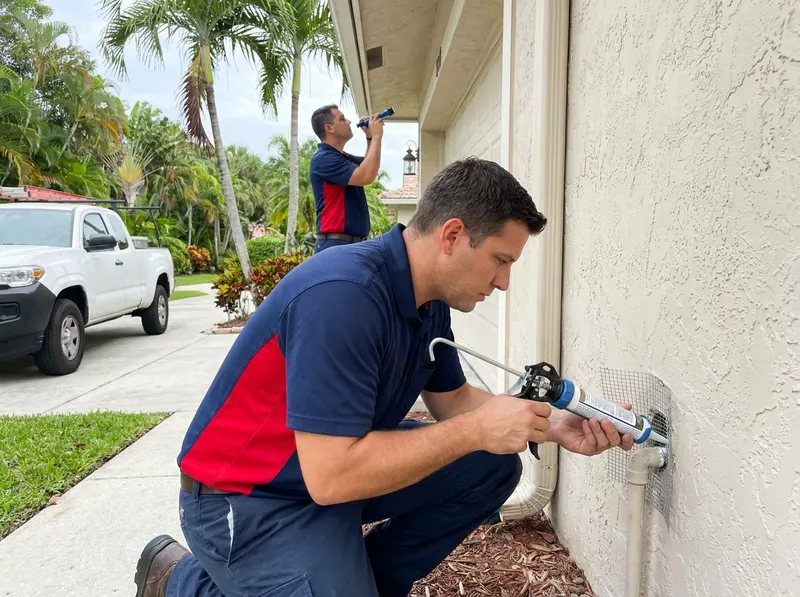
Rodent exclusion and control in West Palm Beach addresses the specific structural vulnerabilities of coastal and subtropical architecture. In historic neighborhoods like El Cid, Grandview Heights, and Flamingo Park, mature palm canopies and continuous Spanish clay tile roofs allow roof rats (University of Florida IFAS Extension) easy transit from exterior tree limbs directly into vented soffits. Rodents require an opening of only 0.25 inches to enter attic voids. Standard snap-trapping eliminates present rodents but fails to prevent reinvasion if the envelope remains unsealed. SecureHive Pest Management utilizes permanent, non-corroding barriers such as galvanized steel mesh, copper wool, and architectural elastomeric caulks meeting structural guidelines from the Florida Building Commission.
Properties bordering inland wetlands or dense vegetation, such as Breakers West and Providencia Park, frequently encounter subterranean Norway rats that undermine concrete slabs and root systems along the South Florida Water Management District canal corridors. In newer planned builds like the Villages of Palm Beach Lakes, rats follow underground conduits, irrigation trenches, and plumbing chases. SecureHive Pest Management installs tamper-resistant exterior bait stations adhering to EPA Rodenticide Risk Mitigation standards to control exterior breeding vectors while isolating baits away from domestic pets and local wildlife protected under the Florida Fish and Wildlife Conservation Commission.
Coastal estates in Southland Park, Northwood Village, and SoSo (South of Southern) frequently experience ductwork contamination from nesting rodents. Droppings, urine markers, and nesting materials degrade indoor air quality, circulating biological allergens through central cooling systems regulated under ASHRAE Environmental Health Standards. Unchecked chewing on electrical runs increases residential fire hazards monitored by the National Fire Protection Association. Structural remediation isolates active runs, cleanses insulation through thermal sanitizing compounds conforming to CDC Rodent Cleanout Guidelines, and secures all fascia gaps.
Long-term rodent defense requires an objective three-step sequence. Step one is a thermal and acoustic attic sweep to map entry points and nesting chambers. Step two is complete mechanical sealing of roof returns, louver vents, and weep screeds using materials approved by the ASTM International Construction Materials Standards. Step three installs internal trapping arrays alongside external tamper-resistant containment checked over a 14-day clearance interval. Unlike broker platforms that outsource customer data or corporate exterminators that demand multi-year commitments, SecureHive Pest Management executes single-project exclusion workflows designed explicitly for high-humidity coastal conditions. Homeowners and property managers can reach technical staff directly at (689) 268-7848 to schedule structural diagnostics.
Every job gets a firm, written price after a free on-site visit.
For standards, safe disposal, and service guidance on pest control services in West Palm Beach, FL, useful references include U.S. EPA, ENERGY STAR, U.S. Dept. of Energy, Consumer.gov, U.S. Census Bureau, and Google Maps. General consumer and small-business resources are available from USA.gov, Better Business Bureau, FTC Consumer Advice, U.S. Small Business Administration, and Ready.gov.
Tell us about your rodent exclusion and control job in West Palm Beach and we'll send a clear, written quote, usually the same day.
 SecureHive Pest Management